
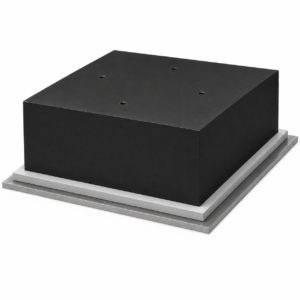
Elastomeric Bridge Bearing Pads
Premium Elastomeric Bridge Bearings Manufacturer in India
Indian Rubber Industry is a trusted manufacturer and supplier of high quality and premium elastomeric bridge bearings, neoprene bridge bearing pads, bridge rubber bearings, and structural bearing pads for highway bridges, railway bridges, flyovers, metro projects, industrial structures, and heavy civil engineering applications.
Our elastomeric bearing pads for bridges are manufactured using premium-grade neoprene and natural rubber compounds with or without steel laminations to meet IRC, MORTH, ASTM, BS, and international
quality standards. Designed to accommodate movement, rotation, and load transfer, our bridge bearing pads ensure long service life while minimizing maintenance.
Whether your requirement is plain elastomeric bearing pads, steel reinforced elastomeric bearing pads, laminated elastomeric bearing pads, or custom-engineered elastomeric bearing strips, Indian Rubber Industry delivers reliable and affordable solutions for infrastructure projects across India and overseas.
What Are Bridge Bearing Pads?
Bridge bearing pads, also known as elastomeric bearing pads, bridge rubber bearings, or neoprene bearing pads, are structural components installed between the bridge superstructure and substructure. They safely transfer vertical loads while allowing controlled horizontal movement, thermal expansion, contraction, rotation, and vibration absorption.
An elastomeric bearing in bridges acts as a flexible interface that reduces stresses on bridge components, improves structural performance, and enhances the service life of the bridge.
Depending on the application, bearing pads may be manufactured as:
- Plain elastomeric bearing pads
- Laminated elastomeric bearing pads
- Steel reinforced elastomeric bearing pads
- Elastomeric bearing strips
- Neoprene bridge bearing pads
- Rubber bearing pads for bridges
Applications of Elastomeric Bearing Pads
Our elastomeric bridge bearings are widely used in:
- Highway bridges
- Railway bridges
- Metro rail projects
- Flyovers
- Elevated corridors
- Concrete bridges
- Steel bridges
- Industrial buildings
- Heavy machinery foundations
- Precast concrete structures
- Parking structures
- Expansion joints
- Marine structures
- Power plants
- Infrastructure projects
Indian Rubber Industry’s bearing pads for concrete and bearing pads for steel beams provide exceptional load distribution while reducing vibration and structural stresses.
What Are Elastomeric Bearing Pads Used For?
An elastomeric rubber bearing performs several important structural functions:
Load Distribution
Transfers heavy vertical loads uniformly from the bridge deck to the supporting piers.
Thermal Movement
Accommodates expansion and contraction caused by seasonal temperature changes.
Rotation
Allows controlled rotation of bridge girders under varying loads.
Vibration Isolation
Reduces vibration and shock transmitted to the supporting structure.
Seismic Movement
Absorbs limited horizontal displacement caused by earthquakes and dynamic loading.
Structural Protection
Prevents cracking, concrete damage, and stress concentration.
Types of Elastomeric Bridge Bearings
Elastomeric bridge bearings are available in different configurations to suit varying structural requirements, load capacities, movement demands, and environmental conditions. Selecting the correct type of elastomeric bearing pad is essential for ensuring the safety, stability, and long-term performance of bridges, flyovers, elevated roadways, and heavy civil engineering structures.
Indian Rubber Industry manufactures a complete range of elastomeric bridge bearings, including plain elastomeric bearing pads, laminated elastomeric bearing pads, steel reinforced elastomeric bearing pads, and elastomeric bearing strips, all engineered to deliver exceptional load distribution, vibration isolation, and structural flexibility.
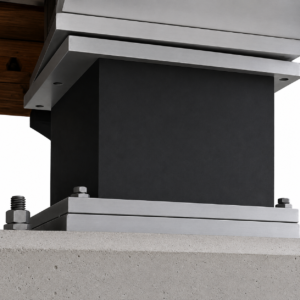
1. Plain Elastomeric Bearing Pad
A plain elastomeric bearing pad is the simplest type of bridge bearing manufactured from a solid block of high-quality natural rubber or neoprene rubber without any internal steel reinforcement. These pads are designed to transfer vertical loads while accommodating small rotations and limited horizontal movements caused by thermal expansion, contraction, and live loads.
Because they are made entirely of elastomeric material, plain bearing pads offer excellent elasticity and flexibility, making them suitable for structures subjected to light or moderate loads.
Unlike laminated bearings, plain elastomeric bearing pads are more economical and easier to install, making them a preferred solution for smaller infrastructure projects.
How Plain Elastomeric Bearing Pads Work
When the bridge deck or structural member applies pressure on the bearing pad, the elastomer compresses slightly while distributing the load evenly across the supporting surface. Simultaneously, the pad absorbs minor rotations, vibrations, and horizontal movements without transferring excessive stresses to the bridge piers or abutments.
This flexibility helps prevent cracking, uneven settlement, and premature structural deterioration.
Applications of Plain Elastomeric Bearing Pads
Plain elastomeric bearing pads are commonly used in:
- Small highway bridges
- Culverts
- Pedestrian bridges
- Residential and commercial buildings
- Industrial buildings
- Machinery foundations
- Precast concrete structures
- Steel beam supports
- Pipe support systems
- Expansion joints
- Light-duty infrastructure
Features of Plain Elastomeric Bearing Pads
- Manufactured from premium neoprene or natural rubber
- Excellent flexibility
- Uniform load distribution
- Good vibration damping
- Resistant to water, ozone, UV rays, and weather
- Easy installation
- Maintenance-free
- Cost-effective solution
- Available in square, rectangular, circular, and strip forms
Advantages of Plain Elastomeric Bearing Pads
- Lower installation cost
- Simple construction
- Long service life
- No corrosion issues
- Excellent resistance to fatigue
- Suitable for moderate structural movement
- Ideal for low-rise and medium-load applications
2. Laminated Elastomeric Bearing Pads
A laminated elastomeric bearing pad consists of alternating layers of high-quality elastomer and steel reinforcing plates that are permanently bonded together during the vulcanization process.
The embedded steel laminates prevent excessive bulging of the rubber under compression while allowing controlled flexibility in shear. This significantly increases the bearing’s load-carrying capacity without sacrificing its ability to accommodate bridge movements.
Laminated bearings are the most widely used elastomeric bridge bearings for modern highway and railway bridges due to their excellent balance of strength, flexibility, durability, and maintenance-free performance.
Construction of Laminated Elastomeric Bearing Pads
Each laminated bearing typically consists of:
- Multiple layers of neoprene rubber
- Internal steel reinforcement plates
- Protective outer rubber cover
- Precision vulcanized bonding between rubber and steel
The steel plates remain completely enclosed within the rubber, protecting them from corrosion and environmental exposure.
How Laminated Elastomeric Bearings Pads Work
The rubber layers provide flexibility, allowing rotation and horizontal movement, while the steel laminates resist excessive vertical deformation.
This unique combination enables the bearing to:
- Carry heavy vertical loads
- Permit controlled horizontal displacement
- Absorb vibration
- Accommodate thermal expansion
- Reduce structural stress
Applications of Laminated Elastomeric Bearing Pads
Laminated elastomeric bearing pads are extensively used in:
- Highway bridges
- Railway bridges
- Metro rail viaducts
- Flyovers
- Elevated expressways
- Multi-span bridges
- Prestressed concrete bridges
- Steel bridges
- Industrial structures
- Airport infrastructure
- Port structures
Advantages of Laminated Elastomeric Bridge Bearing Pads
- High compressive strength
- Excellent load-carrying capacity
- Controlled deformation
- Superior stability
- Longer service life
- Low maintenance
- Excellent fatigue resistance
- High resistance to creep
- Excellent vibration isolation
- Suitable for dynamic loads
- Corrosion-protected steel reinforcement
- Cost-effective over the bridge's lifespan
Why Steel Lamination Is Important
Without steel reinforcement, elastomer tends to bulge excessively under high loads.
Steel laminations:
- Increase stiffness
- Reduce vertical deformation
- Improve load distribution
- Enhance stability
- Extend bearing life
- Maintain structural alignment
3. Steel Reinforced Elastomeric Bearing Pads
Steel reinforced elastomeric bearing pads are specially designed for heavy-duty infrastructure where very high vertical loads, repetitive traffic loading, and long-term durability are essential.
Although similar to laminated bearings, these bearings are specifically engineered using carefully designed steel reinforcement layouts to meet stringent bridge engineering requirements.
These bearings are commonly manufactured according to IRC, MORTH, BS, ASTM, EN, and other international standards.
Working Principle of Steel Reinforced Elastomeric Bearing Pads
The steel reinforcement limits excessive compression while allowing controlled shear deformation within the rubber layers.
This combination enables the bearing to:
- Support massive bridge loads
- Permit rotational movement
- Accommodate thermal expansion
- Reduce vibration
- Minimize stress concentration
Applications of Steel Reinforced Elastomeric Bearing Pads
Steel reinforced elastomeric bearing pads are ideal for:
- National highways
- Expressways
- Railway bridges
- Metro rail systems
- Cable-supported bridges
- Large flyovers
- Heavy industrial structures
- Marine structures
- Airports
- Elevated corridors
- Power plants
- Infrastructure mega projects
Key Features of Steel Reinforced Elastomeric Bearing Pads
- Multi-layer steel reinforcement
- High load-bearing capacity
- Excellent dimensional stability
- Superior compression resistance
- High fatigue life
- Weather resistant
- Ozone resistant
- Water resistant
- Corrosion-protected reinforcement
- Maintenance-free operation
- Long design life
Benefits of Steel Reinforced Elastomeric Bearing Pads
- Safely carries extremely heavy loads
- Minimizes bridge deck movement
- Reduces structural stress
- Improves bridge durability
- Enhances earthquake performance
- Reduces maintenance costs
- Ensures smooth vehicle movement
- Excellent performance under repeated traffic loading
4. Elastomeric Bearing Strip
An elastomeric bearing strip is a continuous strip of elastomeric material designed to provide uniform support beneath structural elements while accommodating minor movements and reducing stress concentrations.
Unlike standard bearing pads, bearing strips are supplied in long lengths and can be cut to suit the required dimensions during installation.
Bearing strips are widely used where continuous support is required rather than isolated bearing points.
Construction of Elastomeric Bearing Strip
Bearing strips are manufactured using:
This combination enables the bearing to:
- Neoprene rubber
- Natural rubber
- EPDM rubber (special applications)
- Plain elastomer construction
- Custom dimensions according to project specifications
Applications of Elastomeric Bearing Strip
Elastomeric bearing strips are commonly used beneath:
- Precast concrete beams
- Steel beams
- Bridge girders
- Concrete wall panels
- Box culverts
- Precast slabs
- Expansion joints
- Structural steel members
- Bridge parapets
- Retaining walls
Functions of Elastomeric Bearing Strip
Bearing strips perform several important structural functions:
- Uniform load distribution
- Vibration isolation
- Noise reduction
- Shock absorption
- Minor rotational movement
- Thermal movement accommodation
- Protection against concrete-to-steel contact
- Prevention of stress concentration
Advantages of Elastomeric Bearing Strip
- Easy installation
- Custom lengths available
- High flexibility
- Excellent compression recovery
- Durable under heavy loads
- Resistant to weather and moisture
- Long service life
- Cost-effective solution
- Suitable for precast construction
- Reduces maintenance requirements
Which Elastomeric Bearing Should You Choose?
The choice of an elastomeric bridge bearing depends on several engineering factors, including the bridge span, design loads, anticipated movements, structural material, environmental conditions, and applicable standards.
Plain Elastomeric Bearing Pads
Plain Elastomeric Bearing Pads are ideal for light to moderate loads, small bridges, buildings, and machinery foundations.
Laminated Elastomeric Bearing Pads
Laminated Elastomeric Bearing Pads are recommended for medium to heavy bridge applications where greater load capacity and controlled deformation are required.
Steel Reinforced Elastomeric Bearing Pads
Steel Reinforced Elastomeric Bearing Pads are best suited for high-load infrastructure such as highways, railways, metro projects, and major bridges requiring maximum durability and structural performance.
Elastomeric Bearing Strips
Elastomeric Bearing Strips provide continuous support for precast concrete elements, steel beams, bridge girders, and other structural members, ensuring even load distribution and vibration isolation.
At Indian Rubber Industry, our experienced engineering team assists consultants, contractors, and infrastructure developers in selecting the most suitable bearing solution based on project specifications, load calculations, movement requirements, and relevant standards. We manufacture premium-quality elastomeric bridge bearings in standard and custom sizes to deliver long-lasting performance for every structural application.
Features of Elastomeric Bridge Bearings
- Premium quality neoprene rubber
- High compressive strength
- Excellent load-bearing capacity
- Weather resistant
- Ozone resistant
- UV resistant
- Water resistant
- Long service life
- Oil-resistant compounds available
- Excellent vibration absorption
- Superior flexibility
- High tear resistance
- Corrosion-free
- Maintenance-free operation
- Suitable for extreme temperatures
- Precision manufactured
- Available in custom sizes
- Manufactured using premium raw materials
Technical Specifications of Elastomeric Bridge Bearing Pads
| Property | Specification |
|---|---|
| Material | Neoprene Rubber / Natural Rubber |
| Hardness | 50–70 Shore A (Custom Available) |
| Reinforcement | Steel Plates Reinforced |
| Shape | Square, Rectangular, Circular, Strip |
| Thickness | As per requirement |
| Load Capacity | Project Specific |
| Standard | IRC, MORTH, ASTM, BS |
Custom specifications are manufactured according to customer drawings and project requirements.
Industries Indian Rubber Industry’s Serve
- National Highway Projects
- State Highway Authorities
- Railway Infrastructure
- Metro Rail
- Airports
- Ports
- Industrial Construction
- Smart City Projects
- EPC Contractors
- Bridge Construction Companies
- Infrastructure Developers
- Government Projects
Elastomeric Bearing Pad Price
The elastomeric bearing pad price, elastomeric bridge bearing price, and elastomeric bearing cost depend on several factors:
- Bearing dimensions
- Rubber grade
- Neoprene or natural rubber
- Steel reinforcement
- Load capacity
- Quantity ordered
- Project specifications
- Testing requirements
Indian Rubber Industry offers competitive pricing for elastomeric bearing pads for bridges without compromising on quality.
For the latest elastomeric bearing pad price list or neoprene bearing pad price, contact our technical team with your drawings and specifications.
Why Choose Indian Rubber Industry?
Indian Rubber Industry is one of the trusted elastomeric bearing pad manufacturers and bridge bearing pads suppliers in India, delivering premium-quality solutions for infrastructure and construction projects.
Our Advantages
- Experienced manufacturer of elastomeric bridge bearings
- Premium-quality neoprene compounds
- Custom manufacturing as per project drawings
- Plain and laminated bearing pads available
- Steel reinforced elastomeric bearing pads
- Strict quality control
- Bulk production capability
- Competitive factory pricing
- Fast delivery across India and overseas
- Technical assistance for project selection
- Reliable after-sales support
As one of the leading rubber bearing pads suppliers, we manufacture:
- Elastomeric bridge bearings
- Neoprene bridge bearing pads
- Rubber bearing pads
- Bridge rubber bearings
- Elastomeric bearing strips
- Structural bearing pads
- Bearing pads for concrete
- Bearing pads for steel beams
- Laminated bearing pads
- Elastomeric neoprene bearing pads
Contact Indian Rubber Industry
Looking for premium elastomeric bridge bearings, bridge bearing pads, neoprene bridge bearing pads, or structural bearing pads?
Our highly qualified and experienced engineering team can recommend the right elastomeric bearing pads for bridges based on your project drawings, load requirements, and applicable standards.
Email: info@indianrubberindustry.com
Phone: +91 99666 33307
Request a quotation today for factory-direct pricing, custom sizes, and technical support.
Frequently Asked Questions (FAQs) – Elastomeric Bridge Bearing Pads
What is an elastomeric bearing pad?
An elastomeric bearing pad is a flexible structural component made from high-quality neoprene or natural rubber that is installed between the bridge deck and its supporting structure. It safely transfers heavy vertical loads while allowing controlled movement caused by thermal expansion, contraction, traffic loads, and structural rotation. Elastomeric bearing pads help extend bridge life by reducing stress and vibration.
Need help selecting the right elastomeric bearing pad? Contact info@indianrubberidustry.com or call us on +919966633307 for expert assistance.
What are elastomeric bridge bearings used for?
Elastomeric bridge bearings are used in bridges, flyovers, metro viaducts, railway bridges, industrial structures, and precast concrete construction. They distribute structural loads evenly while accommodating movement and reducing vibrations, preventing damage to bridge components.
For project-specific recommendations and requirements, email us on info@indianrubberindustry.com or call us on +919966633307
What is the difference between a plain elastomeric bearing pad and a laminated elastomeric bearing pad?
A plain elastomeric bearing pad is made entirely of rubber without steel reinforcement and is suitable for light to moderate loads.
A laminated elastomeric bearing pad contains alternating layers of rubber and steel plates, providing significantly higher load capacity, improved stability, and better control of deformation. Laminated bearings are preferred for highway bridges, railway bridges, and heavy infrastructure projects.
Contact Indian Rubber Industry at info@indianrubberindustry.com or call us on +919966633307 to choose the right bearing for your project.
What is a neoprene bridge bearing pad?
A neoprene bridge bearing pad is manufactured using high-grade neoprene rubber, offering excellent resistance to weather, ozone, oils, water, and temperature variations. Neoprene bearings are widely used in bridges because they provide superior durability and long service life under demanding conditions.
Email us on info@indianrubberindustry.com or call us on +919966633307 for technical specifications and quotations.
Why are steel reinforced elastomeric bearing pads used?
Steel reinforced elastomeric bearing pads are designed for heavy-load applications where ordinary rubber bearings may deform excessively. Internal steel laminations increase compressive strength, improve stability, control bulging, and enhance the overall performance of the bearing under heavy traffic loads.
Looking for heavy-duty bridge bearings? Contact info@indianrubberindustry.com or call us on +919966633307.
What are the advantages of elastomeric rubber bearings?
Some major advantages of elastomeric rubber bearings include:
- High load-bearing capacity
- Uniform load distribution
- Vibration and shock absorption
- Accommodation of thermal expansion
- Maintenance-free operation
- Long service life
- Excellent weather resistance
- Cost-effective performance
- Corrosion-free construction
- Easy installation
For premium-quality elastomeric bearings, email us on info@indianrubberindustry.com or call us on +919966633307
Where are rubber bearing pads used?
Rubber bearing pads are commonly installed in:
- Highway bridges
- Railway bridges
- Metro rail projects
- Flyovers
- Concrete bridges
- Steel bridges
- Industrial buildings
- Machinery foundations
- Precast concrete structures
- Parking structures
- Marine infrastructure
Contact info@indianrubberindustry.com to discuss your application.
Can elastomeric bearing pads be custom manufactured?
Yes. Indian Rubber Industry manufactures high-quality elastomeric bearing pads for bridges in custom sizes, thicknesses, shapes, hardness, and load capacities according to customer drawings, project specifications, and international standards.
Send your drawings to info@indianrubberindustry.com or call us on +919966633307 for a customized quotation.
What standards do elastomeric bridge bearings comply with?
Our elastomeric bridge bearings can be manufactured to comply with various national and international specifications, including:
- IRC
- MORTH
- ASTM
- BS
- EN
- Project-specific consultant requirements
Contact info@indianrubberindustry.com or call us on +919966633307 for compliance details.
What materials are used to manufacture bridge bearing pads?
Bridge bearing pads are typically manufactured using:
- Neoprene rubber
- Natural rubber
- Steel reinforcement plates (for laminated bearings)
- High-performance elastomer compounds
Material selection depends on project load requirements and environmental conditions.
Need assistance selecting the correct material? Email us at info@indianrubberindustry.com or call us on +91966633307
What is the lifespan of an elastomeric bridge bearing?
A premium-quality elastomeric bridge bearing manufactured using high-grade rubber compounds and installed correctly can provide a service life of 25–50 years or more, depending on loading conditions, maintenance practices, and environmental exposure.
How do I choose the right elastomeric bearing pad?
Choosing the correct elastomeric bearing pad depends on:
- Bridge span
- Vertical load
- Horizontal movement
- Rotation requirements
- Environmental conditions
- Structural design
- Applicable standards
Our engineering team can recommend the most suitable bridge bearing pad for your project.
Email your project details to info@indianrubberindustry.com or call us on +919966633307 to help you.
What is the price of an elastomeric bearing pad?
The elastomeric bearing pad price, elastomeric bridge bearing price, and neoprene bearing pad price depend on:
- Bearing size
- Thickness
- Rubber grade
- Steel reinforcement
- Load capacity
- Quantity ordered
- Project specifications
For the latest elastomeric bearing pad price list, contact info@indianrubberindustry.com or call us on +919966633307
Why choose Indian Rubber Industry as your elastomeric bearing pad manufacturer?
Indian Rubber Industry is a trusted manufacturer and supplier of:
- Elastomeric bridge bearings
- Neoprene bridge bearing pads
- Rubber bearing pads
- Bridge rubber bearings
- Structural bearing pads
- Laminated elastomeric bearing pads
- Steel reinforced elastomeric bearing pads
- Elastomeric bearing strips
We offer premium-quality products, factory-direct pricing, custom manufacturing, strict quality control, and timely delivery for infrastructure projects across India and international markets.
For technical support, product enquiries, or bulk orders, contact us today at info@indianrubberidustry.com or call us on +919966633307
Does Indian Rubber Industry supply elastomeric bridge bearings across India?
Yes. We supply elastomeric bridge bearings, neoprene bridge bearing pads, rubber bearing pads, and structural bearing pads to government departments, EPC contractors, bridge construction companies, infrastructure developers, consultants, and exporters across India and worldwide.
Request a quotation or technical consultation by emailing us on info@indianrubberindustry.com or call us on +919966633307